
Friday, 8.08pm
Sheffield, U.K.
The main thing is to keep the main thing the main thing. – Stephen Covey
I have four books on my desk, twelve on the floor, and a worrying number of others waiting for my attention.
Which is distracted by Disney+.
It turns out the vast majority of academic papers are not read, much less cited.
That has to be the case for the majority of content put into the world – on social media, in books, and of course, in this blog.
So, when you’re working on something should you be trying to read as widely as possible?
Should you try and expand your field of vision and look at the range of arguments out there?
I’m starting to think you shouldn’t.
Your attention is valuable and you should protect it – in quite a selfish way.
The attitude to almost everything that crosses your path which is not directly relevant to your business should be to ignore it.
I’m not very good at taking this advice.
It is important to go deep when you’re working on something. You can’t understand it unless you spend time on it.
You won’t understand a subject unless you read the relevant literature.
You won’t understand a business unless you spend time working on it and dealing with clients.
And more often than not your competitive advantage comes not from doing something new but combining old things in surprising new ways.
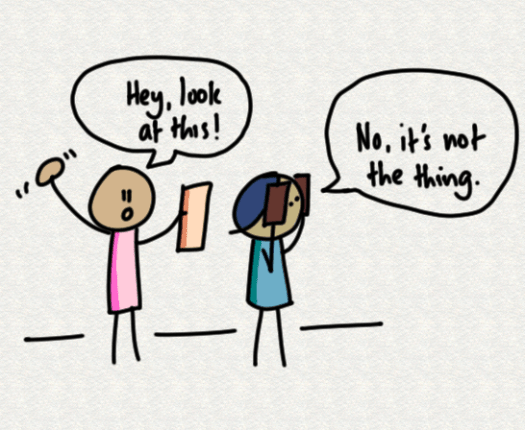
What I really think I mean is that it’s ok to ignore something if it’s not the thing.
If you start reading a paper and it’s clear from the first few sentences that it’s not well written, it’s ok to stop reading it.
This goes for ideas and pitches and beliefs too.
If it’s not for you, that’s ok too. Just say it’s not your thing and walk on.
I’m also starting to realise that’s simply what most academic journals do.
A journal is a place to have a conversation about a particular subject – one that’s set out in the guidelines for authors.
An editor will be quite clear that some papers belong in their journals and others don’t.
Bad papers don’t belong.
Papers that don’t talk about the topics that the journal covers don’t belong.
The rest have a chance, a small one.
Because there’s lots of competition. The way academics are judged is by the number of papers they publish – so like any metric publishing is being gamed.
And that explains why although more and more papers are being published, few are read and it’s hard to tell whether the rest say anything important.
This makes it all the more important to have a good filter – the equivalent of a firewall that drops all requests that don’t meet predetermined criteria.
And now I’m off to read something that isn’t quite my thing, but could be interesting anyway.
Cheers,
Karthik Suresh
 Handcrafted insight