
Saturday, 4.43pm
Sheffield, U.K.
In my Ph.D. thesis, written in 1989, I discussed the fact that when a civilization develops the technology to prevent catastrophic asteroid impacts, it marks a significant moment in the evolution of the planet. – David Grinspoon
August 2022.
That is the only month since June 2017 when I didn’t post a single article on this blog in a month.
It’s hard to remember what I’ve written in that time.
Reading old posts can be surprising, it’s like coming across a new writer for the first time.
And then you realise it’s you.
I’m feeling a bit like that as I tackle my PhD thesis again.
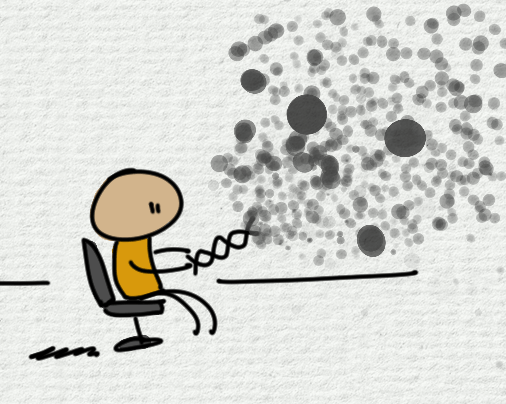
I had this idea that writing a thesis is a bit like plaiting fog, trying to get these ideas into some kind of order and make sense.
But it’s not really like that.
I don’t think there’s a right way to do this work.
Some fields have conventions they expect you to follow.
In the hard sciences you have a hypothesis and you test it and if your results support your hypothesis, when you’ve got something to talk about. If what you’ve discovered is sufficiently novel, then you’re good to go.
But outside that little bubble of “proper” science it all gets a little messy.
Actually, that’s not true either.
Whenever you write something you go through three phases.
First, you write a draft to discover what you think.
This is usually not very good.
Second, you rewrite your draft to get others to understand what you think.
This is much better.
Third, you rewrite your draft so it’s acceptable to the people in power.
This one is usually shit.
I mean, you have to play the game but this is why a good manager will hire a good sales writer and then use what they write without trying to make changes.
The writer is writing to sell off the page.
The manager is editing so that their manager will not be unhappy.
So they add extra words and clarifications and technical terms and generally ruin everything.
I think this happens with academic writing as well.
You write something.
Then you rewrite it to make the reviewers happy.
This is not a bad thing. The point of peer review is to make your paper stronger, and in many cases the feedback you get does make it stronger.
But, the nature of the academic publishing system means that you are probably going to have to pander to power to get your work published.
Everyone who publishes in academia is pretty open about that.
So, here’s my recipe for writing your next thesis.
First, write to understand.
Second, write to be understood.
Third, try not to screw it up.
Cheers,
Karthik Suresh
 Handcrafted insight