
Thursday, 5.32pm
Sheffield, U.K.
I feel like when you are really appreciative, it makes it easier to have a better outlook and perspective of life in general. – Miguel
A practitioner cycles between action and reflection; we do something and then we think about what we did, how it worked (or didn’t), and what we might do next or differently.
Sometimes it feels less like cycling between the two modes and more like vibrating, with acting and reflecting taking place constantly.
For example, any practitioner working with an organisation starts by asking “How can we understand what people in this organisation want or need to do?”
We need an answer to this question so that we can prepare an operational solution.
But what if people don’t know what they want?
In the 1980s, people used deficiency-based methods to address this problem, asking questions like “what’s wrong?”, “what’s your biggest problem?”, “what needs fixing?”, or asking about challenges, which is the the same type of question.
Such problem-solving approaches actually made it harder to improve some situations.
What if change really happens when people talk to each other, imagining and articulating what they think is possible and agreeing what to do next?
When people are passionate about something, you do not need to persuade, incentivise or coerce them into taking action.
How do you know what they are passionate about?
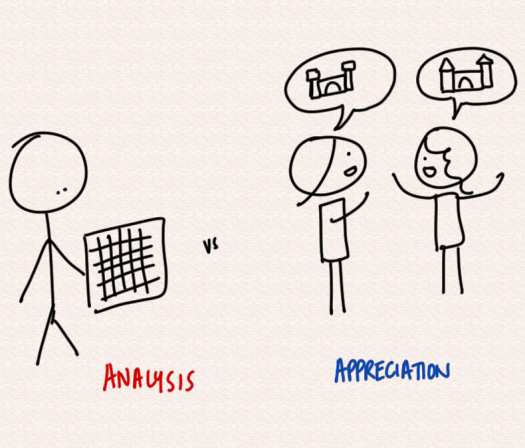
Well, you do this by talking to them using approaches such as Appreciative Inquiry.
There are five principles that underpin Appreciative Inquiry:
- Organizations are constructed by people who talk to each other about what they believe to be true.
- The questions people ask are not neutral — they reveal what they are passionate about.
- The story of the organization is constantly being told and re-told.
- What we do today is guided by what we think is going to happen tomorrow.
- The good kind of change is positive, grounded in hope, optimism, and open minds.
Designing a workshop or engagement approach that leans into these principles is impossible unless a practitioner is willing to try approaches, reflect on what happened and try to constantly improve.
It’s a reinforcing loop that’s needed to develop your practice.
After all, isn’t that what you’re passionate about?
 Handcrafted insight