I’ve Just Discovered My Most Dedicated Reader

2024-09-24_dedicated-reader.png

Tuesday, 9.18pm

Sheffield, U.K.

Are you stalking me? Because that would be super. – Ryan Reynolds

Too many of my posts recently have been about generative AI.

I’m sorry, this is one more. It’s an important topic after all.

In my last post, I wrote about the future for human work, in particular about writing and knowledge.

My blog is not particularly widely read. I don’t actively promote it. It’s a place where I work on ideas by working on sentences. If someone reads a post and finds it useful that’s a bonus.

So, after I wrote my AI post, I thought, why not ask ChatGPT to write an article in my style?

Here’s what it started off with.

“Karthik Suresh’s writing style is characterized by a lucid, engaging tone that often mixes personal insights with a deep understanding of technology, business, and strategy. His pieces frequently strike a balance between being informative and approachable, with a hint of philosophical reflection.”

My first thought was, “Ok, well that’s nice”.

Followed by, “Sh*t, ChatGPT knows my work”.

Now how should I respond?

Let’s review the basic options. Fear. Flight. Fight. Food.

Actually, let’s go with the motivational triad: pain; pleasure; and sex.

The last one is not an option, so let’s consider the routes to pain or pleasure.

GenAI is going to take jobs. There is no doubt about that.

Transcribers. Translators. Voiceover artists. Visual creators. Writers.

A whole lot of jobs are going to change forever. That’s pain right there.

But is there pleasure?

I think that if you learn how to use these tools it will make you better at what you do.

I’ve worked on a couple of technical papers that I believe are stronger because I used these AI tools to help me learn quickly about concepts that are quite tricky.

I asked a person for help, one time, and was told I should join their class and it would take three months to learn.

Or….

I could get an AI to help me write some code, explain how things worked and figure it out from there.

I chose the easier option.

I asked ChatGPT to tell me how I could make my writing better.

It told me that my work lacked boldness. It wasn’t provocative. I’m too moderate in my views. And I don’t provide enough detail.

That’s good feedback. Points to consider and work on.

That’s pleasurable.

Here’s the thing. Options can be both good and bad at the same time.

The way you react to your options delivers good or bad results.

Me… the technology isn’t going away.

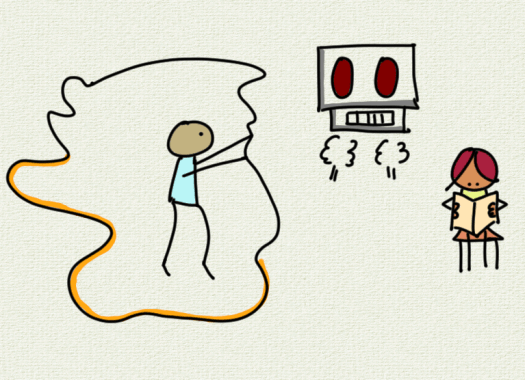
If a robot has peeked through the window and read everything I’ve written and knows more about how I write than I do myself – what should I do?

Throw stones at it and drive it away?

Or make friends with it?

What would you do?

Cheers,

Karthik Suresh
Statistics Are About The Past. Look To The Future.

2024-09-22_writing-as-thinking.png

Sunday, 7.54pm

Sheffield, UK.

I abhor averages. I like the individual case. A man may have six meals one day and none the next, making an average of three meals per day, but that is not a good way to live. – Louis D. Brandeis

I spent nearly three hours yesterday working and reworking a handful of sentences, trying to articulate what I had done between 2013 and 2017.

I wrote sentences. I wrote some more. I looked at them, shuffled them, reordered them. I put them aside. Later, I wrote new sentences on the same topic. Now I need to read, reorder and eventually type them into the computer.

What’s the point?

In five minutes between starting this post and writing the first paragraph ChatGPT wrote me a 1,759 word briefing note on logistics decarbonisation. It’s easy to read, contains what I need to know, and can be used virtually unaltered.

How can you be sure it’s correct? There are facts in there that I haven’t checked. But the weight of probability is on the side of the machines – literally – because it’s a statistical machine and the words are the most likely ones that would come up in that kind of writing. The last time I corrected the output from a generative AI, I introduced mistakes. It felt like a milestone, where I, the human, was the most fallible part of the system.

So where is the role for humanity in this? Do we just sit back and let the tide of AI generated material wash over us? How should we respond?

I think we do two things.

First, we recognise that knowledge is interesting and wrestling with data and information is part of the process of acquiring knowledge. If tools make it easy to do parts of the work then that simply means we can extend the edges of what we can learn about. When books first came out people complained that there were too many books being published to read in a lifetime. The Internet exploded our access to content. Now generative AI can spew out unlimited amounts of material.

In responds, many of us will pull down the barriers and restrict our reading to trusted material. How many news sites do you go to now? Our capacity for information processing has not increased with the technology for information creation. So we have to be selective – use our attention intentionally to gain the knowledge we are interested in and need.

Which takes us to the second point.

Statistics are good for showing what happens on average but not what happens to you in your particular situation. You can focus on your niche and figure out what you need to do to add value in a specific area. That area will be big enough to be interesting and valuable and too small to be able to be tackled with statistical methods. It will require human involvement, armed with tools like negotiation skills and constructive approaches – where you and others co-create the future.

In other words, where you look forward.

Statistics is about the past.

Human work is about what comes next.

Cheers,

Karthik Suresh

How To Think About Theory In Action Research

2024-09-19_theory.png

Thursday, 6.41am

Sheffield, U.K.

It is easier to act your way into a new way of thinking than to think your way into a new way of acting – anonymous

I’m grappling with the concept of “theory” in Action Research.

I’m not alone, many students and researchers avoid Action Research because of the need to come up with theory – it’s not clear what theory actually is or how to come up with it.

We have to start somewhere when unpicking a concept, so let’s start at a beginning.

You think. We all think.

A thought could be as simple as “If I listen carefully and take notes, I’ll learn about the situation my client is facing”.

It’s easier in the physical sciences – if I drop this rock it will fall down rather than go up.

We then take action based on what we think.

And we observe what happens.

This step of thinking to action is repeated countlessly.

Imagine a therapists office. The theory behind therapy might be that you listen to your patient and help them work out how to improve their situation.

That’s one way of thinking.

If you watch the Netflix documentary “Stutz” and read some of the commentary online you’ll find some criticism that the celebrity therapist the show is about “tells” his clients what to do rather than following an established process.

He thinks differently.

He does so because of what he has learned as a result of helping his patients – from the action he has taken.

But how do we learn from action?

We need time to reflect. To wonder about what happened, to write down what we remember, to make lists, to sort them, to categorise the ideas in them.

We need to articulate what we’ve learned.

This can be painstaking work.

It’s easy to take action – to do something.

When you do something a lot you start to forget how it’s done, how you learned to do it, what’s actually taking place.

Slowing down and analysing what you did is much harder than it seems.

You need tools for that.

Like slips of paper.

Once you start to see what has happened you can start to package your ideas into a framework.

This is the start of theory building.

I recently attended a conference where I was talking about my research to a colleague.

I used a lot of words to explain something I was doing.

He nodded and said, “Ah right, you mean…”

And then he said a word.

For example, I talked about how it took time to get good at using digital tools.

He said, “Ah right, you mean ability“.

That’s the next step, encapsulating a bunch of words and ideas in a single one, or a succinct phrase, and it gets you started with theorising.

You start to think about “truths” in this step.

I think that perhaps the difference between thinking and theory is that theory is thinking smartened up and put in a suit.

It’s a polished version of what you think, that’s ready to go out and meet the world and stand on it’s two feet.

It’s a grown up version of thinking.

It’s the rich flavour that’s left when you boil away all the excess liquid in a stock.

Of course, none of these descriptions really help with saying what a theory is – or how to write one.

We muddle our way towards creating theory by writing and having it reviewed and criticized and writing again.

Theories gain importance when they are used and found useful by others, especially when it comes to the social sciences and Action Research.

They are the way we make sense of our worlds.

Cheers,

Karthik Suresh

Why should you develop a reflective practice?

2024-09-05_appreciative-inquiry.png

Thursday, 5.32pm

Sheffield, U.K.

I feel like when you are really appreciative, it makes it easier to have a better outlook and perspective of life in general. – Miguel

A practitioner cycles between action and reflection; we do something and then we think about what we did, how it worked (or didn’t), and what we might do next or differently.

Sometimes it feels less like cycling between the two modes and more like vibrating, with acting and reflecting taking place constantly.

For example, any practitioner working with an organisation starts by asking “How can we understand what people in this organisation want or need to do?”

We need an answer to this question so that we can prepare an operational solution.

But what if people don’t know what they want?

In the 1980s, people used deficiency-based methods to address this problem, asking questions like “what’s wrong?”, “what’s your biggest problem?”, “what needs fixing?”, or asking about challenges, which is the the same type of question.

Such problem-solving approaches actually made it harder to improve some situations.

What if change really happens when people talk to each other, imagining and articulating what they think is possible and agreeing what to do next?

When people are passionate about something, you do not need to persuade, incentivise or coerce them into taking action.

How do you know what they are passionate about?

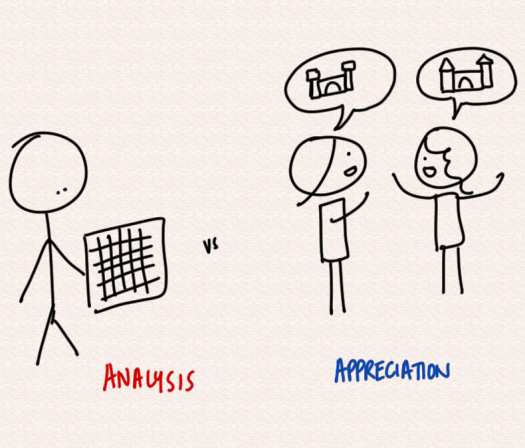
Well, you do this by talking to them using approaches such as Appreciative Inquiry.

There are five principles that underpin Appreciative Inquiry:

  1. Organizations are constructed by people who talk to each other about what they believe to be true.
  2. The questions people ask are not neutral — they reveal what they are passionate about.
  3. The story of the organization is constantly being told and re-told.
  4. What we do today is guided by what we think is going to happen tomorrow.
  5. The good kind of change is positive, grounded in hope, optimism, and open minds.

Designing a workshop or engagement approach that leans into these principles is impossible unless a practitioner is willing to try approaches, reflect on what happened and try to constantly improve.

It’s a reinforcing loop that’s needed to develop your practice.

After all, isn’t that what you’re passionate about?

Stutz’s Tools As A Way To Handle Obstacles

2024-09-04_partX.png

There are plenty of difficult obstacles in your path. Don’t allow yourself to become one of them. – Ralph Marston

I’ve just watched Jonah Hill’s “Stutz” again on Netflix, and it made me reflect on my consulting practice.

Stutz is a film by Jonah Hill about his therapist, Dr. Phil Stutz, and his unconventional approach to therapy, in particular using small drawings on index cards as tools, to help his clients address their problems.

A Stutz drawing is a tool that helps you take an action that moves you from a current negative state to a new, positive state.

We use these tools to help us understand what we do and what we should do next.

One of the tools is Part X – which teaches you to recognize an inner saboteur that tries to stop you moving forward.

These are the objections, the blocks that prevent you from making progress.

Could this Part X also explain obstacles faced when working in organizations?

Such obstacles include not being given the full picture, being pointed the wrong way, or not getting relevant information.

Obstacles slow progress and can stop it entirely – people give up and decide to work the system rather than improve it.

Perhaps we have to see past the blocking Part Xs and find a way through.

One way to do this is learn how to see the big picture and how the blockers you face fit into the larger organizational dynamic.

And then think about what action you can take next.

We should expect to encounter obstacles and wrong turns – we may need to tackle them or go back and try a different path.

We may be wrong, but we will be moving forward, in the direction we think is right.

The trick is to keep moving.

Cheers,

Karthik Suresh