
Follow effective action with quiet reflection. From the quiet reflection will come even more effective action. – Peter Drucker
I am not an academic. Yes I’m working on a PhD, but I’m not sure I’m doing a great job at that. Or perhaps I’m doing it the way I do things, by bumbling around and following things that are interesting. When I’ve done that in the past, something happens next. And sometimes that something is unexpected.
Here’s the thing. I am spending a huge amount of time – and I mean really quite huge – trying to understand what happens when people talk in a group about a situation they find problematic.
I watched a talk by Robert Pirsig recently where he said that everyone’s situation is different and the problems they have are unique. But in another way, everyone’s situation is the same and we all have the same problems. It all depends on how much we know about the situation we’re in right now.
I see this all the time. I don’t know what your particular situation is and what you’re finding problematic. If I listen to you and take notes I’ll learn about how you see that situation and understand the constraints and challenges you’re facing. As we talk, I’ll learn about what you’re already tried, what worked and what didn’t, and we’ll figure out what to try next. This is always going to be something unique to you.
At the same time this is a process that I’ve done hundreds of times now. Your situation has a history, now is because of what happened before. The current moment has actors and relationships and beliefs. And there are possible futures, which will be activated by agreements between all of us. A past, present and future. That’s always going to be the same.
This activity is a kind of research. A research based in action. The idea is that we think about what to do. Then we take action. Then we reflect on what’s happened, learn from it, and then plan and take new action.
Some people think this isn’t research, it isn’t science. Come on now. So you do something. Then you write about it. Then you do something else. And you say it’s science? No. This thing you’re doing isn’t replicable. Once you’ve done it, it’s done. No one else can do it again. You can’t step in the same river twice.
Ah, I say. You’re right, you can’t step in the same river twice. But you can get wet. You can get washed away, or make it safely to the other side.
Is this too abstract? Let’s make it concrete. The tools of “real” science are quantitative – numbers, figures, calculations. Go into any situation, any real situation, and use numbers to calculate what you think people should do. Then tell them and see how they react.
They will react with feelings. They will not react with cold, rational responses. They will instead, using the language of transactional analysis, have warm fuzzies or cold pricklies. Your maths will not carry the day. Your audience’s feelings will.
This has been a hard thing to learn. We imagine we can control things through logic. But that part of our brain is quite recent and requires a lot of training. A few people can respond that way. Most people use that other part of the brain, the deeper one, the one that responds to a tiger by running away rather than counting its stripes. Any method you use to work with people has to work with their feelings rather than trying to eliminate them.
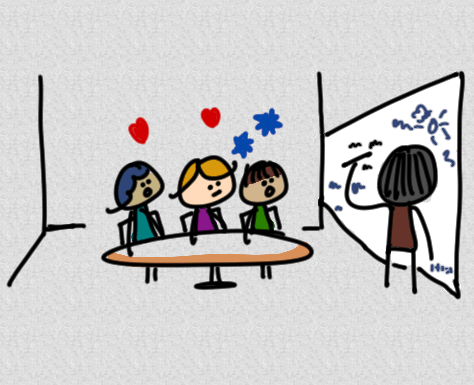
Perhaps the real value in a meeting is to get people to tap into their feelings about the situation and possible courses of action, using those feelings as a guide to come to an agreement on the next thing to do. And this is not hard to do – just get people talking and those feelings will come out in their chatter.
All you have to do is listen, ask questions and take notes.
Cheers,
Karthik Suresh
 Handcrafted insight