

Monday, 8.05pm
Sheffield, U.K.
So long as you have food in your mouth, you have solved all questions for the time being. – Franz Kafka
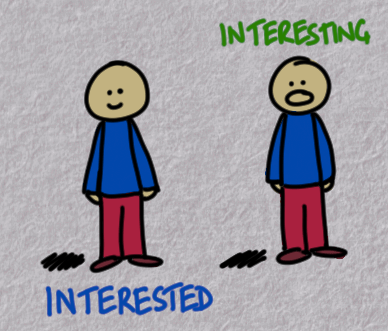
The question in the picture that accompanies this post is from a book by Po Bronson.
Is there any question that is more important for you?
As long as you have food, that is.
Let’s pull these strands together.
I mentioned Doug Lisle in a previous post because I’ve been watching his videos and like the way he uses drawings to explain his ideas.
He’s a psychologist for the McDougall program.
I didn’t really think too much about that.
I’ve also been wondering about food.
I grew up in India and went to boarding school. I ate a lot of food, everything that was served, and was pretty skinny. I never really thought about it at all.
The first time I noticed packaged food was when I was 17 or 18 and went into the real world – stuff like Coke and crisps. I went to town on those salty and sugary things and put on quite a lot of weight. When I realised that, I exercised, and it came back down again.
But it’s been up and down since then. 10-15 years of commuting and quick food didn’t help.
Cooking seems to complicated. There are all these ingredients and instructions and I don’t really understand it all.
One of the things I learned in school was to reason from first principles – do I did that.
We have four tastes, I had learned: salty, sweet, bitter and sour. So I thought – how would I cook with these? A lot of food that I remember seems to use combinations of salty and sour food, and I liked those. And sweet. Everyone likes that. Bitter, not so much.
So that’s all we really need to make food that tastes nice – salt and sugar. Maybe sour. What about bitter?
I was experimenting with these recipes when I finally looked at this McDougall program thing and realised that it was actually about eating choices. It made the same points I was thinking: we’re designed to seek out salt and sweet foods. Bitter and sour are warnings – they tell us things might be poisonous.
Salt is a mineral.
And sweet comes from plants, especially starchy ones.
Now, suddenly my diet – the traditional ones – made sense. They’re based on starches, with combinations that make food taste good by combining salt, sugar, sour and even bitter. We even have a vegetable called a bitter gourd. I didn’t like it.
So, if that is the food that is traditional why are people in India having such high rates of heart disease?
That’s a combination of many things – the pollution and the lack of exercise among them.
But the biggest problem is the added fat in our diets – oils and ghee used in cooking.
Fats are the problem. Fats from meat and dairy and poultry and it’s the fat that is making us sick.
Fat is incredibly expensive to make. You have to work at it to make oil from plants. You have to feed animals until they’re fat enough to eat. It’s bad for the environment.
But there’s more money in that, I expect, than there is in selling you potatoes and rice.
I’m interested in making better decisions – and using drawing and writing as a way to help me do that.
If you want to do something with your life you first have to be healthy.
That means getting your food right.
And I don’t think we have it right around the world – something is wrong. What we’re told to eat and what we have in the market is making us fat and sick.
Maybe before we ask the big questions about what we want out of life we need to ask the little ones first.
Like what’s on our plate?
Cheers,
Karthik Suresh



 Handcrafted insight