What Do You Think Of Stable Doors?

+TAGS:

2024-02-28_stable-door.png

Wednesday, 9.42pm

Sheffield, U.K.

Being born in a stable does not make one a horse. – Duke of Wellington

There was a bit of an uproar yesterday in the small corner of the Free Software world on Fosstodon – the Mastodon instance about that kind of thing.

WordPress was in talks to sell its user content to the AI large language models businesses.

Your data, that is, if you have a blog on WordPress.com.

Like I do.

It’s not all bad, you can go into the settings and check a box to opt out of doing this.

Looking at the date on that, looks like the documentation only came out yesterday (27th Feb 2024).

So I’m not actually that far behind shutting the stable door.

Now… I haven’t heard about this on any of the other social media platforms, possibly because they are full of self-promotion and less useful stuff.

Another mailing list that I’m on sent a note around about Stack Overflow, the popular question and answer service, being inundated with responses generated by AI.

Long, tedious, not very helpful ones at all.

There’s a term for what is starting to happen to almost everything around us.

“Enshittification

The enshittification of everything is happening.

The amount of noise in the world is increasing exponentially now that we have created machines to make the noise faster.

Words, pictures, videos – all the things that took time to create and make are now created in seconds.

Maybe less.

And the reality is that we are the worse off for it.

Not because the stuff isn’t good – some of it is.

But because there’s so much of it that it will take us forever to even look and see to find what we might like.

It’s like what happened to Amazon a while back.

Once anyone could publish you ended up with the general enshittification of ebooks.

You had a good book and then some random bloke decided that he’d write the “summary” of the book and now many people probably use AI to write a bunch of summaries based on other people’s summaries.

It’s pureed vomit. That’s what it is.

So here’s what’s going to happen.

  1. We’re going to go back to our favourites – watch the same shows again and again.
  2. We’ll go with recommendations of people we know and trust for new things.
  3. We’ll try the things that go viral accidentally – that somehow everyone has found at the same time. Traitors anyone?

Actually, this is no different from what we were doing before.

Carry on folks.

Cheers,

Karthik Suresh

What Impact Will AI Have On You?

2024-02-27_research-problem.png

Tuesday, 9.08pm

Sheffield, U.K.

What are we having this liberty for? We are having this liberty in order to reform our social system, which is full of inequality, discrimination and other things, which conflict with our fundamental rights. – B. R. Ambedkar

I haven’t worked on my thesis in a few days and it’s been nagging at me – I know that I should do it.

I was a bit worried because I couldn’t remember where I had gotten to and how I would lay down the next sentence.

So I had a quick look at the document and realized something interesting.

The last time I worked on the page I was thinking about what the next few sections might look like.

So, I asked ChatGPT to suggest an outline for what I needed to include, and had put the response (suitably edited) in as a prompt.

When I came to look at it later I realised that some of the brainwork had been done for me – I simply had to work on the next bit and answer the question on the page.

This is an interesting outcome.

Some people are threatened by AI because they think it will take their jobs away.

The reality is that someone who is good at their job can become even more productive with AI, outperforming others even more.

For example, say you’re a fairly good writer – what impact will AI have on you?

Well, you might think that anyone can write as well as you because they can use a large language model and pump out text.

But so can you.

In fact, what you can do is have the LLM help you write better.

Which means what you create is probably going to be better than what an average writer can do with the AI tool.

In other words the same hammer wielded by a novice is going to have different results than one wielded by an expert.

I think it’s already clear that AI models do not replace you.

One of two things can happen.

You avoid the new technology and become irrelevant – the world moves on.

Or you embrace the technology and do even better than you do now.

Is there really even a choice?

Cheers,

Karthik Suresh

How To Think About Career Moves

2024-02-23_decisions.png

Friday, 9.34pm

Sheffield, U.K

The harder routes you climb, the more interesting the climbing gets and the more crazy moves you are forced to figure out. – Adam Ondra

Knowing what you now know, what would you do differently?

I’ve been looking back over the last ten years or so, at the kinds of things I came across and studied and what things are still relevant and which are less so.

I feel like I’ve been through a few cycles and, like any trader knows, until you’ve been through an up and a down you don’t really know what it’s like and how you will respond.

And it’s not just about your response when things are down – it’s also what you do when you’re at the top.

The biggest mistake people make with money is buying high and selling low.

What mistakes do they do with their careers?

This decision tree from the book Career Games is a good one.

At any point in your career you can make moves.

These moves can be instrumental or they can be blunders.

Take, for example, someone early in their career.

Putting your hand up for a project shows ambition – and doing that means you will probably be considered when the next, larger project comes around.

That could, in some cases, be a career defining move, one that sets you on a path of promotions and success.

Or it could be a career-refining one – positioning you for growth in your department.

Sitting back could be a blunder.

At best, it might be minor, a career distracting move that sees other people, perhaps ones less able than you, move on and progress further.

Or worse, sitting back and complaining, or even sabotaging what’s happening could be career limiting at best and career ending at worst.

Of course, the moves you make are only the manifestation of your career strategy.

Which in turn stems from your analysis of what you want from your career, what is important to you, what you want out of a job and exactly what your competitive advantage is in any potential negotiation.

The move is the tip of the spear, the thing people see.

The thing pushing it along is what matters.

The line that started this post is one from Brian Tracy, a motivational speaker that I haven’t really thought about in years.

And I think I should end with another from Zig Ziglar who reminds us that you can get everything you want if you help other people get what they want.

And that is probably the simplest strategy of all.

Cheers,

Karthik Suresh

What Is The Point Of It All?

2024-02-22_motorbike.png

Thursday, 7.27pm

Sheffield, U.K.

“You’ve got to live right, too. It’s the way you live that predisposes you to avoid the traps and see the right facts. You want to know how to paint a perfect painting? It’s easy. Make yourself perfect and then just paint naturally. That’s the way all the experts do it. The making of a painting or the fixing of a motorcycle isn’t separate from the rest of your existence. If you’re a sloppy thinker the six days of the week you aren’t working on your machine, what trap avoidance, what gimmicks, can make you all of a sudden sharp on the seventh? It all goes together … The real cycle you’re working in is a cycle called yourself. The machine that appears to be “out there” and the person that appears to be “in here” are not two separate things. They grow toward Quality or fall away from Quality together.” – Robert Pirsig, Zen and the art of motorcycle maintenance

I came across a picture of my motorcycle recently.

Well, my old motorcycle. It was stolen years ago. And before that it spent a lot of time being taken apart because it just didn’t work properly. That’s why the fuel tank in the picture above is resting on the seat rather than the traditional location.

Zen and the art of motorcycle maintenance is possibly my favourite book and I keep going back to that when I think of anything.

We all have choices to make. Some of them seem important. Some are important. And it’s important to be able to tell the difference between the two.

David Graeber reaches out for this idea in his book “Bullshit jobs”. A lot of things we do aren’t worth doing, and so they aren’t worth doing well.

If AI comes along and does those things better that still doesn’t make them worth doing.

But it’s going to be hard to tell the difference between one thing and the other.

Let’s take something simple, like health.

You know carbs are bad right, they raise blood sugar?

You also know that’s wrong – because what’s the point of food that doesn’t raise your blood sugar?

You need the sugar to fuel your body and brain – and where do you think that’s going to come from if not carbs?

But the food advice out there is simply too confusing to make any sense.

And when something is confusing you have to ask yourself who benefits from confusion?

It’s not the people selling you potatoes.

It’s the ones selling you highly processed food.

And much of the information out there is really marketing material.

This really applies to many decision situations – electric cars or diesel? Remote or office? The list can go on.

Which is where ZatAoMM comes in.

There is one criterion that rules them all.

Ask yourself this the next time you have to make a choice, little or large.

Once you’ve made it, do you have peace of mind?

That’s all that matters.

Cheers,

Karthik Suresh

This Thing Is The Thing That Gets To The Thing

2024-02-20_the-thing.png

Tuesday, 7.38pm

Sheffield, U.K.

Words may show a man’s wit but actions his meaning. – Benjamin Franklin

As some of you know my research programme is a type of action research.

The way to do action research is to do something and then think about what you’ve done and think about what you could do better and then do something again.

In action research theory is about practice – which makes it suitable for answering the kind of questions that other research methods find hard to address.

It’s also criticised by some people as not scientific because it doesn’t follow the usual approach of hypothesis, experiment, results etc.

We don’t really listen to those people.

But they have a point – action research is not replicable; you can’t do the same thing the same way again to see if it will give you the same results.

The most you can do is be clear about how you did something – and make the process recoverable.

Now you have a choice about how to do this.

Do you talk about what you’ve done or do you try and show what you’re doing?

The difficulty with describing something that people aren’t familiar with is that it’s extremely hard to understand what you mean.

Imagine describing an elephant to someone that’s never seen one before.

This is not an uncommon problem. I studied electrical engineering and passed exams on relays without ever seeing one or even a picture in real life.

I didn’t learn anything from that experience.

So if you really want someone to learn something you need to show them the thing in action.

And it’s even more complicated if the thing you’re talking about is really something that gets you to the thing you’re really after.

For example, a technique to gather information more effectively is not about the process of information gathering but about the decision you want to make once you have the information.

Or, in the famous example, what you want is not a drill but a hole.

Cheers,

Karthik Suresh

How To Create A Story

2024-02-19_advance-retreat.png

Monday, 9.44pm

Sheffield, U.K.

Every great story seems to begin with a snake. – Nicolas Cage

I’m reading Will Storr’s ‘The Science of Storytelling’ and I keep stopping to jot down notes. There’s a lot in there that makes you think.

I’m thinking about this more because I have a presentation to do soon and I’m a little worried that I haven’t got my story right. I don’t know if what I’m saying is created in a way that helps the audience or just ends up being something they can’t connect with.

One of Storr’s suggestions is that every scene (or every slide in my case) needs to advance the story.

What you don’t want is something happened and something else happened, and then something else happened.

What you want is things to happen because.

So, a thing happened.

Because of this, something else happened.

Or, I suppose, you could also have: a thing happened; it happened because…

When you put together a series of because links rather than and links it keeps the audience interested.

This applies mostly, however, to “commercial” stuff – the kind of thing you want to do if you want to become a best-selling author or movie maker.

If you want to be a good writer – well then you can do what you want to get something across the way you like.

Some people spend pages describing a flower, apparently.

And I’m pretty sure Gabriel Garcia Marquez writes a sentence that goes on for pages in “100 years of solitude”.

I’d say that most of my favourite books don’t really follow this formula at all.

Think Zen and the art of motorcycle maintenance.

And actually, I’m ok with it when it comes to thrillers – the kind of thing that I have the time to read on holiday.

Although I do get very irritable if people write in the present tense.

What’s wrong with just telling the story?

Anyway… where was I?

Oh yes.

I guess this is a formula, a tip, something that you can try out and see if it works for you.

Cheers,

Karthik Suresh

The Attractiveness And Perils Of Excess

2024-02-12_excess.png

Monday, 9.46pm

Sheffield, U.K.

Moderation is a fatal thing. Nothing succeeds like excess. – Oscar Wilde

As I looked around for quotes to start this post, I assumed that they would clearly think it was a bad thing.

I was wrong.

The human brain, I am beginning to believe, is not constructed to cope with having too much.

It wasn’t a problem we found in nature so we just didn’t evolve to deal with it.

Nature, in its randomness, has no plan for us, no expectations, no requirements.

We evolved in a world where each creature’s survival depended on a balance – one that it found in its environment with other creatures and living things that also tried to survive.

Human beings, with their big brains, are the only creatures to break that link and decouple their ability to gather resources from the rate at which those resources occur in nature.

We can force food to grow, animals to multiply and make the things we need rather than waiting for them to grow or finding them on the ground.

So our problems now stem from having too much of everything.

We have non-communicable diseases or lifestyle diseases.

Which is a nice way of saying we eat too much of the wrong things.

We have stresses brought on by working in a made up system for made up things.

But at least some of those things are real.

My children are desperate to acquire imaginary things in imaginary worlds for imaginary money – for which they have to spend real time.

I don’t know where this leads other than a world where many people are unhappy and sick and don’t know how to change things.

And one reason for that is because money is the measure of things – if it doesn’t make money it’s not worth doing.

Although, there are some people who think differently.

They try and eat thoughtfully, create businesses that build communities, and share resources, such as with the Free software movement.

They’re the ones who’ll be first up against the wall if the people with money and power have their way.

But, there’s a certain natural selection that happens.

People with power and money don’t like to share so there will always be less of them.

It’s like that thing about carnivores and herbivores. Although plant eaters are seen as weaker they vastly outnumber the predators.

But in our world the predators have found that it’s easier to make the prey sick – that way they stay under control and also you make money from the medical bills.

Is that too cynical?

It is. No one is smart enough to invent such a system of control and rewards.

It’s happened by accident, just like everything else with evolution.

This blog is about making good choices.

Start with making good ones about your health.

Cheers,

Karthik Suresh

Why You’re Constantly Doing A Cost-Benefit Analysis Of Everything?

2024-02-08_chicken.png

Thursday, 9.04pm

Sheffield, U.K.

I like to say I’m determined; some people would call it stubborn. It depends on your perspective. – Peggy Whitson

I was thinking about drawing a chicken.

The reason I was thinking of a chicken is because I was thinking of Doug Lisle’s presentation about a chicken crossing the road.

He has a chicken on the screen and asks why it crossed the road.

[General laughter from the audience]

There are some suggestions thrown out. To get to the other side and all that.

Then he explains – what the chicken is doing is a rapid cost-benefit analysis.

Is it better for me to stay here and look for worms or go over there where there might be more worms?

This cost-benefit analysis is something that underpins every situation.

With each sentence you read you’re rapidly evaluating the utility of continuing to read versus giving up and doing something else.

And before you opened this post you made an analysis of whether it was worth opening or not.

This is quite a powerful insight.

Let’s say you’re giving a presentation – what happens if you think of each slide as part of a cost-benefit calculation.

You’re costing someone a certain period of time – their attention.

In return you give them a benefit.

Are you droning on and on or does each slide you advance have a new, clear benefit to offer?

And if it doesn’t are you better off dropping it?

This works at every level – if you ask someone out on a date they’re doing a cost-benefit analysis; what’s it going to cost them and what are they going to get out of it?

The answer to your question depends on the results of their calculation.

But is it possible that those kinds of calculations only work when you’re faced with immediate decisions in the here and now?

What about longer term decisions that are affected by many factors – with many outcomes, each with their own costs and benefits?

In that situation, maybe you have to go a little with your gut – see the costs and do it anyway.

Maybe the chicken isn’t the only model you need to know in order to make good decisions.

So, in the end, I’ve gone for a fantasy bug-ish thing – hoping that it will help make sense at some point.

Cheers,

Karthik Suresh

How Do We Respond To Big Voices?

2024-02-07_limits-to-knowledge.png

Wednesday, 9.39pm

Sheffield, U.K.

No man’s knowledge here can go beyond his experience. – John Locke

I’ve been thinking a little about managing conversations – and in particular how to handle / manage / cope with big voices.

These voices are everywhere. They’re in the news, in social media, in any single forum you can think of.

And they’re very loud.

Let’s go to the research.

We assume that people who are quiet are also powerless, they are dominated and, as they have no voice, are not heard.

On social media we are told that if we don’t post every day then we won’t get any business. To be voiceless is the same as being invisible.

But in many organisations and contexts those who stay silent do have power over those who we hear from. Think about Hollywood and the power of the studio over the actors.

Fletcher and Watson’s (2007) ethnographic study suggests that what you don’t see matters.

The power someone holds has to do with the dynamic network of relationships that exist in the social context you’re looking at.

There is always a cost-benefit calculation going on, of what is said and what is done, what is offered and what is received.

In each relationship, if the benefits are right, then what is said doesn’t matter. But if it’s not, that’s when you see problems.

What you’ve got going on are “implicit contracts” or “psychological contracts”.

People are quiet for three reasons: they’re going along with you; they don’t want to tell you you’re heading for trouble; or they don’t want to hurt your feelings.

For the person that’s loud – this is a problem – because you only know there is an issue once things have gone wrong.

Cheers,

Karthik Suresh

References

Fletcher, D and Watson, T. 2007. “Voice, Silence and the Business of Construction: Loud and Quiet Voices in the Construction of Personal, Organizational and Social Realities”. Organization.

The Challenge With Crossing Borders

2024-02-06_play-pen.png

Tuesday, 7.45pm

Sheffield, U.K.

In individuals, insanity is rare; but in groups, parties, nations and epochs, it is the rule. – Friedrich Nietzsche

I have always been wary of groups. It comes from leaving home young and seeing early how people act – and deciding I didn’t want a part of that.

Of course, that’s not a good thing.

In Terry Pratchett’s books wizards live in a university, well fed and satisfied – only looking for how they can climb the ladder by helping someone higher up out of his shoes.

It’s only men, of course, except when there was a woman but that’s a whole book.

This is because wizards, when left to themselves, retreat to towers and start hurling fireballs at other wizards and everyone gets very upset as a result.

Isolation is something that we think leads to creativity – but that might only be a romantic notion.

Real creativity happens in groups, in collaborations, when different kinds of knowledge come together.

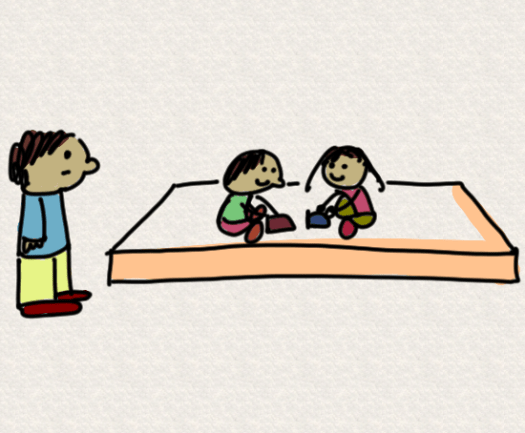
But it’s hard to get into a sandpit and play nicely with others.

And even if you do get in the issues don’t end – they just become one of group dynamics rather than individual ones.

Groups that follow one approach seek to convert people on the fence, flatter those that already believe in them and criticize those on the other side.

But if you really want to understand why someone thinks differently than you then you have to spend time listening and watching.

Not judging.

There is no easy solution to this – walk your own path or join a group. Which do you choose?

I guess you try both and see what happens.

Cheers,

Karthik Suresh