
Thursday, 9.56pm
Sheffield, U.K
Automation is no longer just a problem for those working in manufacturing. Physical labor was replaced by robots; mental labor is going to be replaced by AI and software. – Andrew Yang
I’ve been using Chat GPT almost every day for around six months now, perhaps longer, and I’m not sure I could go back to working without access to something like that now.
So why is that?
I’ve recently had a paper accepted for publication.
While writing it, I had to learn a number of new techniques and understand how to get and interpret statistical results.
What were the options for doing this in the past?
Well, there are books and tutorials and those are great starting points.
And there are experts, people who can help you.
But the expert I reached out to wanted me to take a course rather than helping me get the job done.
Which is fine – for them – but not really what I needed.
I found that instead I could have a conversation with Chat GPT and work towards learning and understanding what was required.
This is similar to the rubber duck technique.
If you want to test your understanding of something get a yellow rubber duck that you use in the bath and start talking to it – explain what you’re trying to do.
Now imagine if that duck talked back to you.
That’s what Chat GPT does.
You can ask it questions. You can try out its suggestions. You can get its take on the results that come out of the programs you run.
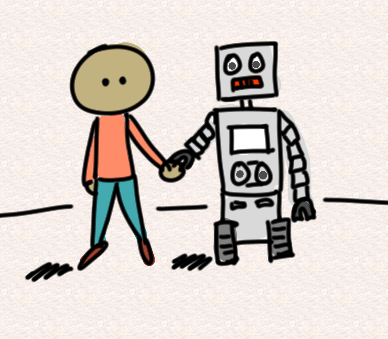
It’s like having a collaborator, a smart research assistant or colleague that’s able to give you a point of view.
That doesn’t mean you can abdicate your responsibility to understand the results or take its generated output as correct.
But it’s something that’s a lot more than nothing – you have a starting point.
For example, I’m stuck on some code right now where the Chat GPT answer isn’t working – the response to an error code is the same as the previous response.
But it also helped me quickly rework some working code to make it more flexible.
It’s helping me write copy faster that I can then edit and rework.
It’s not writing this though, in case you were wondering.
The reality is that technology will always change how we do things.
What is less likely to change is why we do something.
As humans, as living creatures, the natural state of being for us is not work, but play.
Taking the labour out of work makes it more like play.
Is that not a good thing?
Cheers,
Karthik Suresh
 Handcrafted insight