
Sunday, 6.49pm
Sheffield, U.K.
I’m writing a book. I’ve got the page numbers done. – Steven Wright
As a researcher that eventually wants to get published I want to know how to produce good quality writing using a reliable and repeatable process. A key question is whether I should go straight to the computer and start typing or start with paper and write a longhand draft with a pencil or pen.
A computer is great for typesetting. Early software tools took text with markup and prepared it for typesetting and printing. Eventually we had word processing software that let you see exactly how your text would look when you entered it. But is using a computer from the start the best way to create quality work?
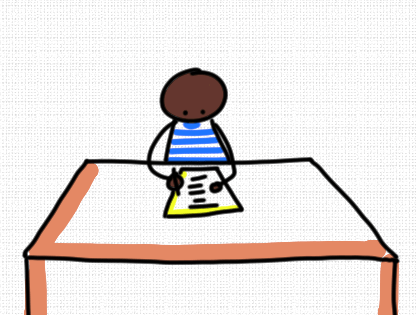
Writing by hand on paper is slow but you’re also not distracted, The only thing to do is keep adding words to the page. It’s portable, requires no batteries and you can write pretty much everywhere. But is longhand still relevant today – should it be part of your writing process or consigned to history? I’ve scoured the Internet and here’s what I’ve found.
Writing is a process
Writing consists of at least four phases. First there is prewriting. Then comes drafting, followed by revising, and finally editing. Once you have a finished text you can get on with typesetting and proofreading until you get to publication. Each paper you write will go through multiple revisions until it’s polished to your satisfaction. You will never get it right the first time. Using a computer from the start can give you a false sense of confidence in the quality of the finished product. Just because it looks finished that doesn’t mean it is finished. A handwritten first draft has to be rewritten at least once, when you type it into the computer. That means starting a draft on paper forces you to write with rewriting already in mind.
Writing is about producing words, sentences and paragraphs. A paragraph introduces and expands upon a single idea. Each paragraph ranges from 100-250 words. Jordan Peterson, in his essay writing guide suggests aiming for 10 sentences of 10 words each. If you write double spaced you will end up with a paragraph’s worth of content on a single page. The pad I’m writing on has 31 lines and I use 16 of them with 7-11 words on each line. That comes to around 120-130 words on average. Starting the page with a topic sentence and filling the rest of it with supporting sentences will give you a single paragraph, the building block of your paper. Write on only one side of the page because it makes it faster to type up but if you think of ideas later you still have space to add them on the back of the page. If you’re worried about wasting paper write the next piece using the other side of your used pages once you’ve entered them into the computer.
Writing a paragraph to a page makes it easy to visualise how much writing you need to do. A 500 word blog post will run to around five pages of writing. If you have an introduction and conclusion that leaves three pages or three ideas that you can introduce. This structural constraint encourages you to select the three strongest ideas that help you make your point. It encourages you to focus and develop the idea introduced in your topic sentence on each page. If you think of an unrelated idea it should be noted elsewhere. If you can’t think of enough to write leave the rest of the page blank and start on a new page. You’ll come back and fill it in when you think of something later.
Structuring your writing
Having a collection of paragraphs on individual pages makes it easy to structure and organise your post. All you have to do is shuffle the pages into an order that works. In the editing phase Jordan Peterson suggests expanding each paragraph into individual sentences and working on them one at a time, moving them around, rewriting them or deleting them entirely. Once on the computer I use a macro to do this and seeing each sentence on its own does make it much easier to visualise how to make it better.
I have never liked outlines but following this process has helped me see the value of having one. There is a lot to think about when you’re writing a paper and you can’t keep it all in your head. The only way to organise a lot of material is to group it into smaller, understandable chunks, aiming for 7 +/-2 elements in each group. Writing down a list of ideas gives you a jumping off point for each paragraph. The collections of paragraphs build into subsections and sections and eventually help you in creating large and complex pieces of writing like a thesis or book.
Looking to the past
To understand best practices when it comes to writing longhand you have to go back to older texts that predate the widespread use of computers. Methods of Authors by Hugo Erichsen is a delicious introduction to the habits and eccentricities of the writers that worked a century or so ago. Two excellent articles on how Charles Darwin made notes and wrote his books are on the Friends of Darwin website. Newspaper writing and editing by Willard Grosvenor Bleyer describes how newspaper articles were often sent to the compositor a page at a time, each one containing a paragraph called a “take”, which would be put together to make the final story. If such methods worked under the time pressure of daily news production perhaps they will work for you and me as well.
And now…
Writing by hand is not for everyone but if you do want to try it here are some rules to follow.
- Use a soft pencil and write quickly.
- Use only one side of the paper.
- Write double spaced.
- Write an outline first.
- Write a paragraph to a page – write in “takes”.
- Get away from the computer and watch the words pile up.
Cheers,
Karthik Suresh
 Handcrafted insight